◉
Nervous-system regulation
Encourages deep relaxation and may help a horse shift out of a guarded, high-alert state.
Equine craniosacral bodywork uses a light, attentive touch to support relaxation, mobility, body awareness, and the horse’s natural capacity to rebalance.
Equine craniosacral bodywork is a gentle, non-invasive hands-on modality focused on the craniosacral system and its relationship with the nervous system, fascia, posture, and movement. Sessions follow the horse’s responses rather than forcing change.
When a horse feels safe enough to soften, the whole body can begin a different conversation.
Diamond L approaches each horse as an individual—listening through the hands, allowing time for processing, and working within the horse’s comfort.
Every horse responds differently. Owners commonly seek craniosacral bodywork to support the following areas.
Encourages deep relaxation and may help a horse shift out of a guarded, high-alert state.
Supports ease through the poll, jaw, neck, spine, shoulders, ribs, pelvis, and limbs.
May help soften patterns of restriction held through the body’s connective-tissue network.
Supports body awareness, alignment, balance, and more organized movement.
Can complement thoughtful conditioning and recovery routines for working and performance horses.
Creates space for settling and “unwinding” patterns that may follow stress or difficult experiences.
Gentle attention may support horses showing bracing, head sensitivity, or difficulty relaxing through the topline.
May be used alongside veterinary-directed care to support comfort and overall well-being during recovery.
Recognizes that compensation in one area can influence movement and comfort elsewhere.
Bodywork is about observing the horse in front of us—before, during, and after each session.
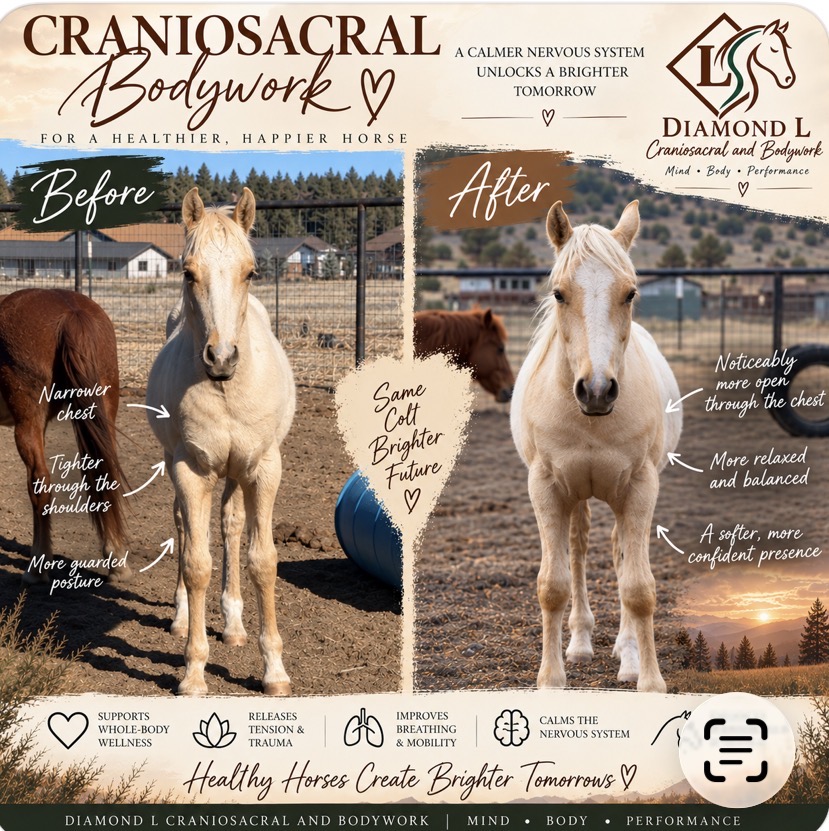
The focus: A colt presenting with a closed, guarded appearance through the chest and front end.
The session: Gentle whole-body craniosacral work gave him time to process, soften, and reorganize without force.
What we observed: A more open appearance through the chest and a softer overall posture after the session.
Observations describe this individual horse; results vary.
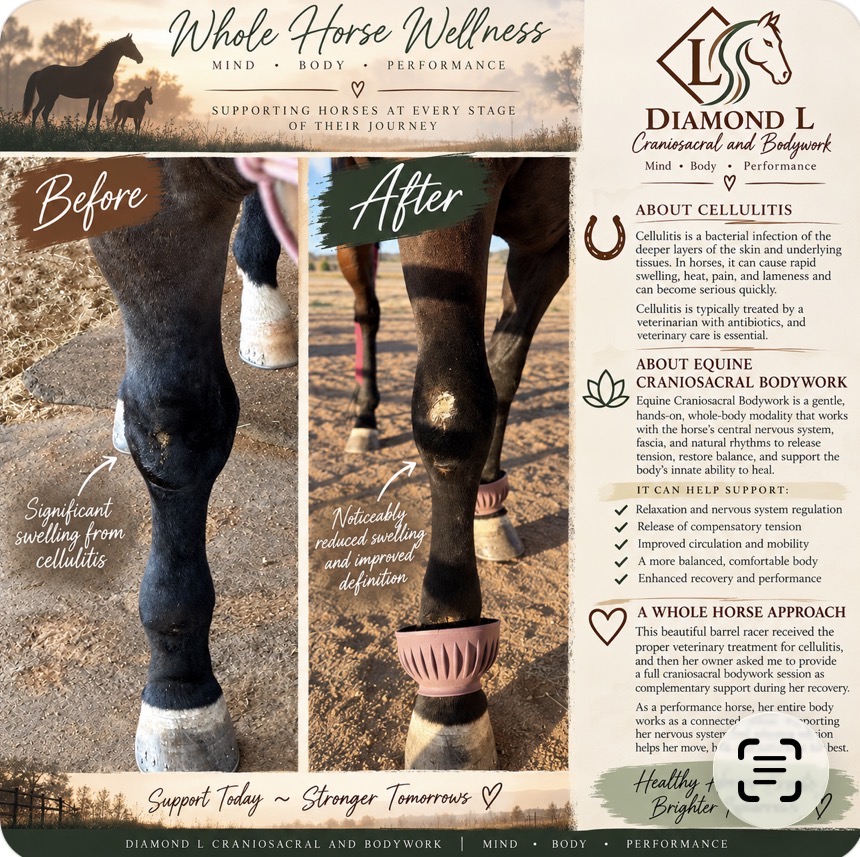
The situation: A barrel horse developed cellulitis in a front leg and received veterinarian-directed antibiotic treatment.
The bodywork: Her owner chose a full craniosacral session as complementary support for relaxation, whole-body comfort, and recovery.
Why whole-horse care matters: When one limb is uncomfortable, a horse may compensate elsewhere. Gentle bodywork can support the rest of the body while primary medical care addresses the condition.
Craniosacral bodywork does not treat cellulitis or replace veterinary care.
We begin with your horse’s history, current concerns, posture, movement, and comfort.
Light contact follows the horse’s responses. Pauses, licking, chewing, yawning, lowering the head, and quiet stillness may occur.
The horse is given time to process. We discuss observations and practical after-session support.
This space is reserved for verified feedback from Diamond L clients.
“Hi sunshine! Cruised Stoney at a race this morning. He was super supple in his warm-up—feels really good! Thank you, friend! 😘”Sadie Regarding her horse, Stoney
“Chelise—Bo the Mustang is a different horse after your expert technique. Thanks!”Duke F. Regarding his horse, Bo the Mustang
“Chelise has been working on our horses, Ace and Paycheck. They’re pretty big boys, and it’s amazing how craniosacral bodywork helps horses all the way around. It’s a miracle—our boys love it! Chelise has great hands and is very good at what she does. Not many people have the gift that she has. We recommend her 100%. Try it—your horse won’t be disappointed!”Judy Owner of Ace & Paycheck
“Chelise is a miracle worker. She has healing hands ❤️❤️”Elise S. Glendale, Arizona
Tell me what you are noticing, what your horse has experienced, and what you hope to support. Diamond L proudly serves horse owners throughout Arizona.